The most dangerous campaigns are not the ones that fail
Campaigns that appear successful but lack clear objectives are the most dangerous. Discover how to build an influencer marketing system that actually works, based on 1,500+ campaigns and returns exceeding 35%.
2 min read

The most dangerous campaigns are not the ones that fail. They are the ones that appear successful.
Because when a campaign fails, everyone reacts.
But when a campaign generates reach and engagement... … most teams assume it worked.
And that's where the real problem appears.
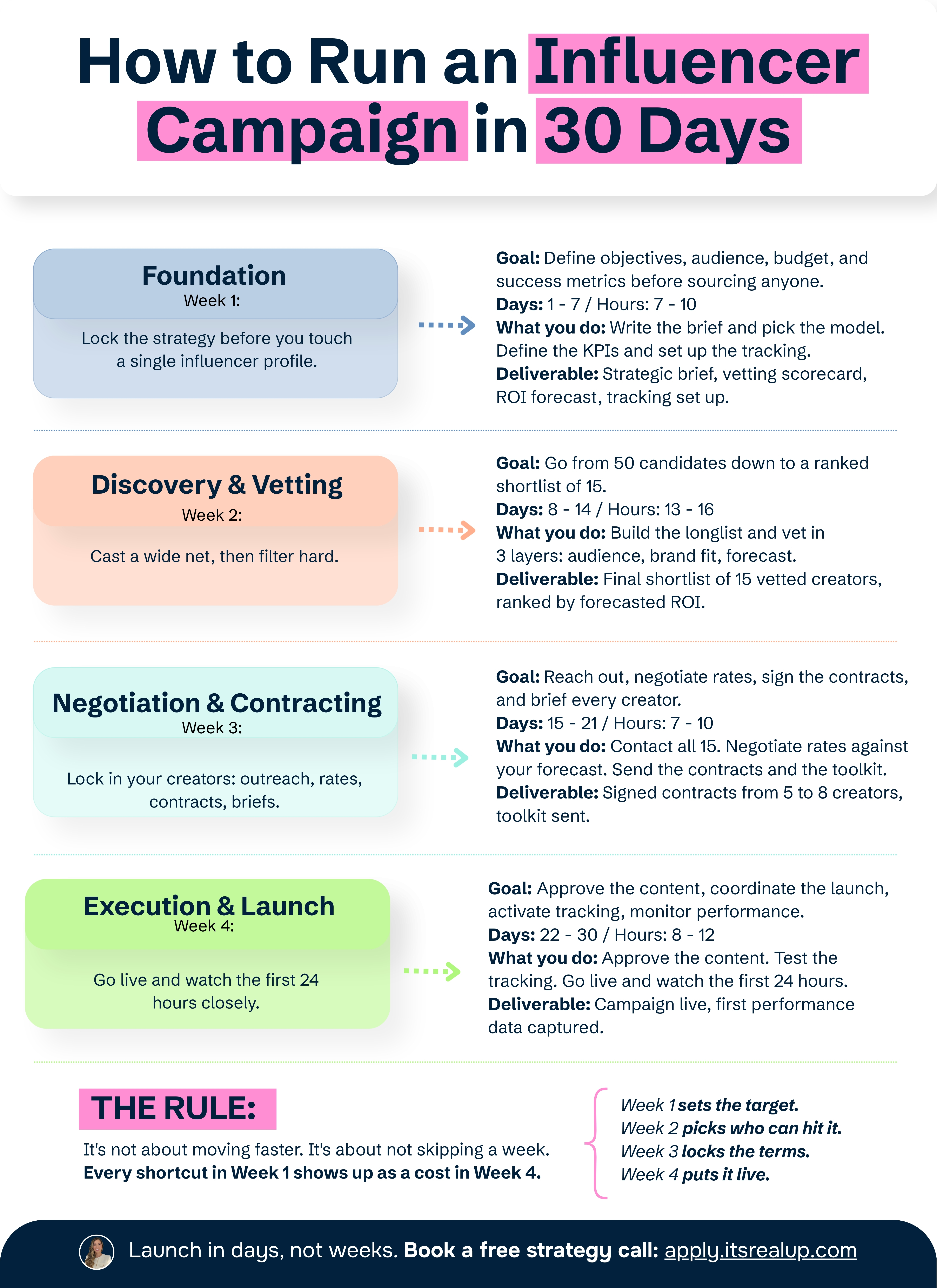
Yesterday, during the webinar with Gabriela Loyola, we discussed something we see over and over again after more than 1,500 campaigns: many brands are investing in creators, but they don't always have clarity on:
→ What objective the campaign should achieve
→ What KPI really matters according to that objective
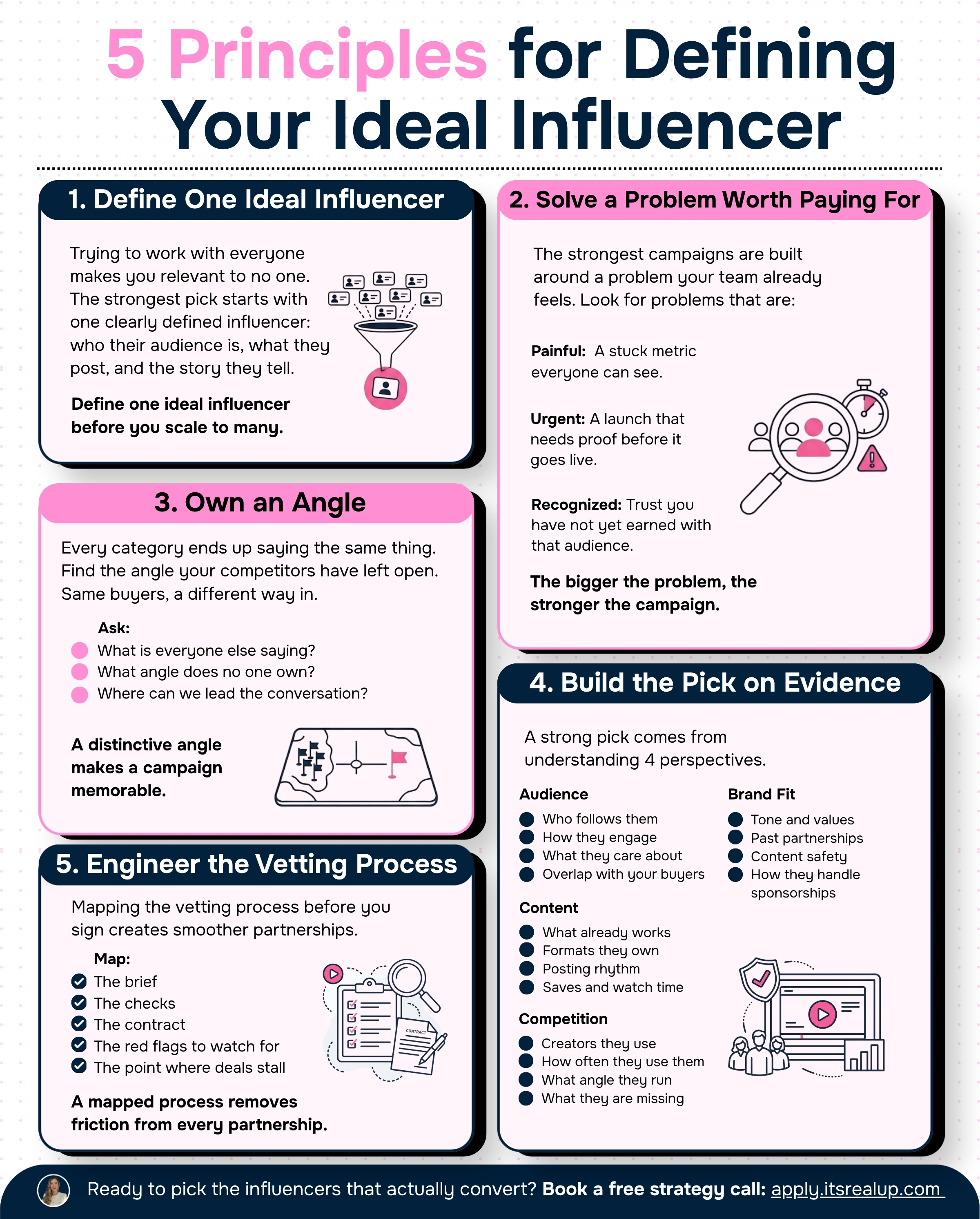
→ What type of creator makes sense to activate
→ What should be optimized while the campaign is running
→ And what results should be scaled, corrected, or stopped afterward
That's where the gap is.
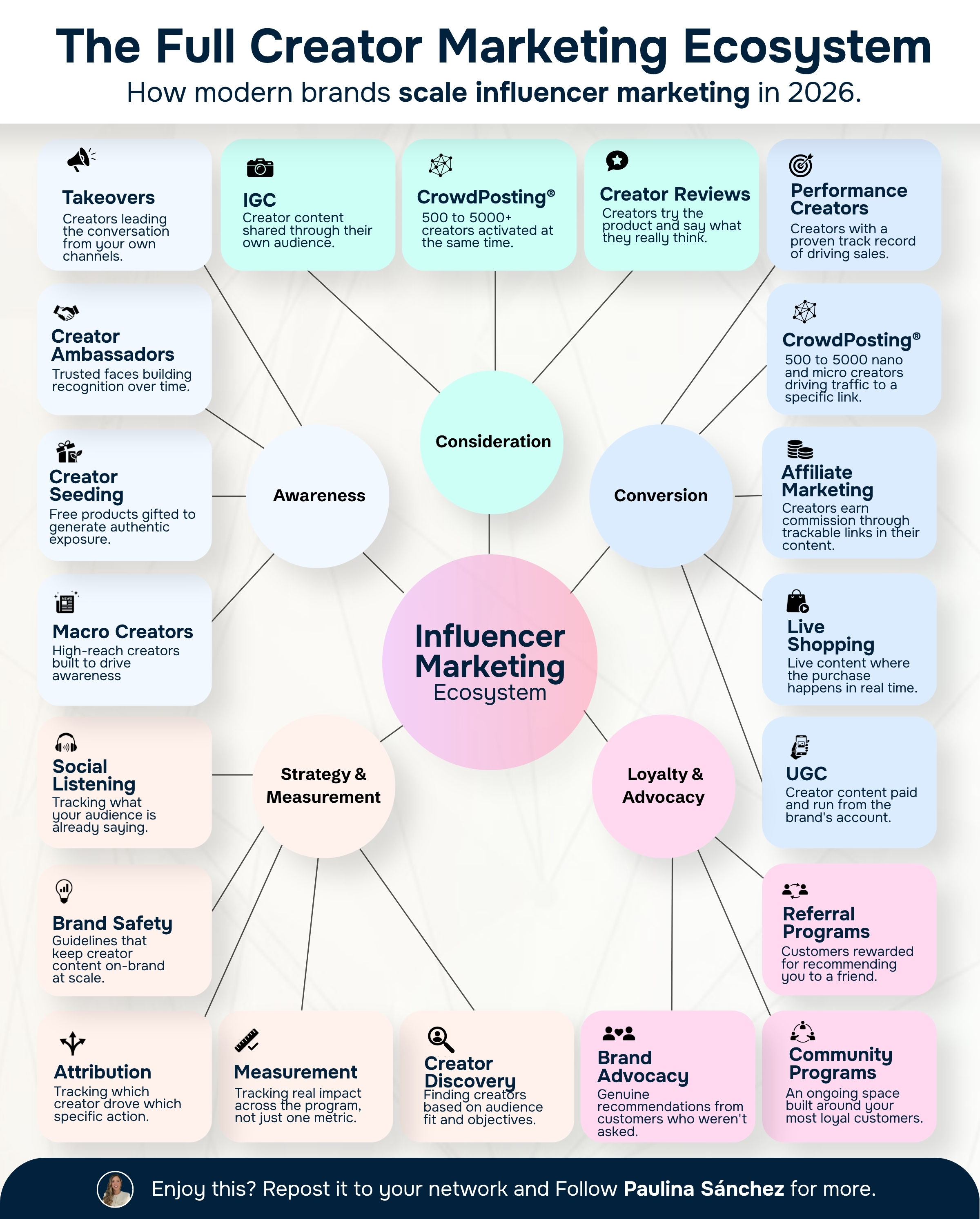
Because influencer marketing is not measured the same way if the objective is awareness, consideration, conversion, or full funnel.
An awareness campaign should not be evaluated with the same KPIs as a conversion campaign.
The objective defines the KPI, the KPI defines the strategy, and the strategy defines the mix of creators, platforms, formats, and budget.
And that's where many campaigns break before they even start.
One of the most important points we shared was this:
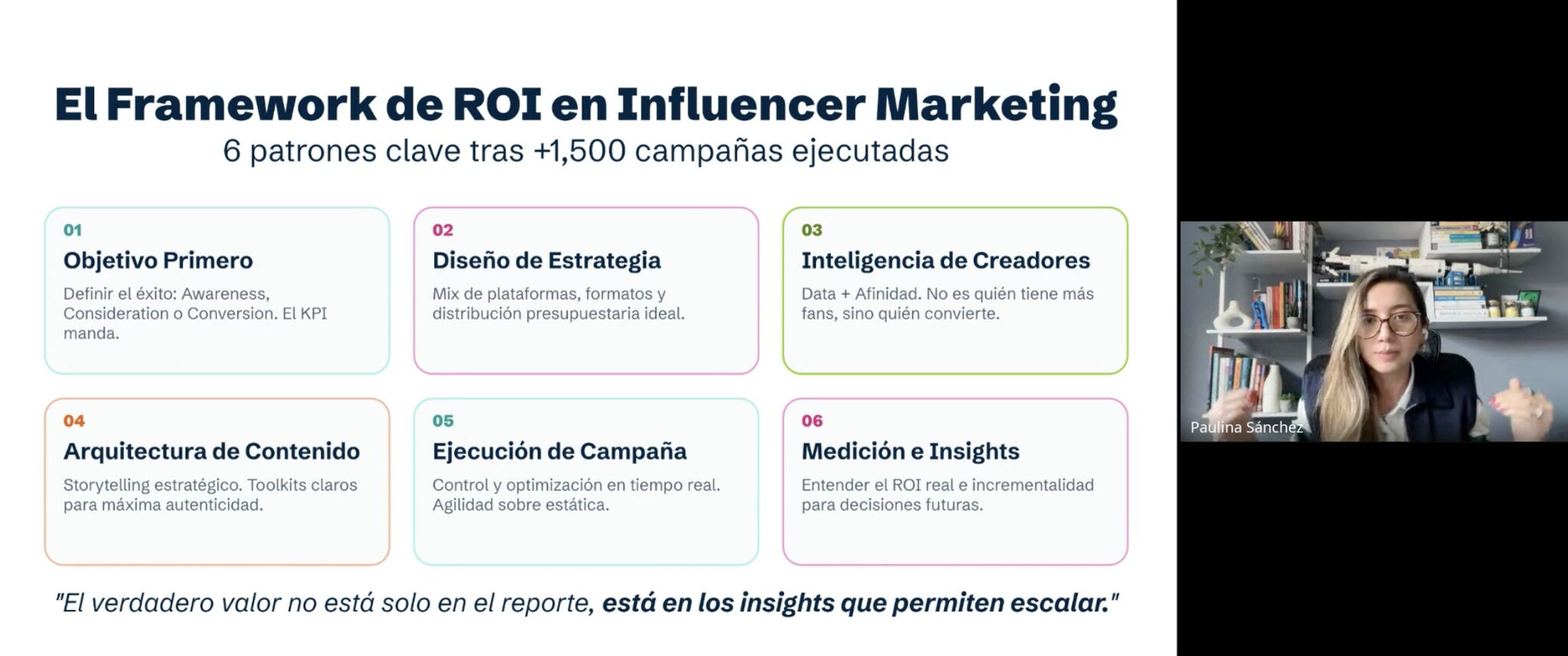
Campaigns with the best ROI don't start by choosing creators, they start by defining what success means.
Then come the 6 pieces of the system:
1. Objective first
2. Strategy design
3. Creator intelligence
4. Content architecture
5. Campaign execution
6. Measurement and insights
Because executing influencer marketing is not just about publishing content, it's about having a system to know what's working, what's not, and what to do while you still have time to optimize.
A data point we shared yesterday that still surprises me:
Leading consumer brands allocate between 15% and 30% of their marketing budget to influencer marketing and achieve returns exceeding 35% compared to other media.
A real case we shared that raised several questions was this:
We activated 8,400 creators in 210 cities in a coordinated way.
Result: +700% in downloads and over $500,000 USD in earned media value (EMV).
The key? We didn't choose creators first, we defined the objective, designed the system, and activated at scale.
Because in the end, the goal is not to execute more campaigns.
It's to build a system that allows you to know what works, what doesn't, and what to do next.
That's where true ROI begins.
I've opened my calendar to provide exclusive 1-on-1 consulting on how to win in influencer marketing, let's talk:
If you liked this content
Follow me on LinkedIn