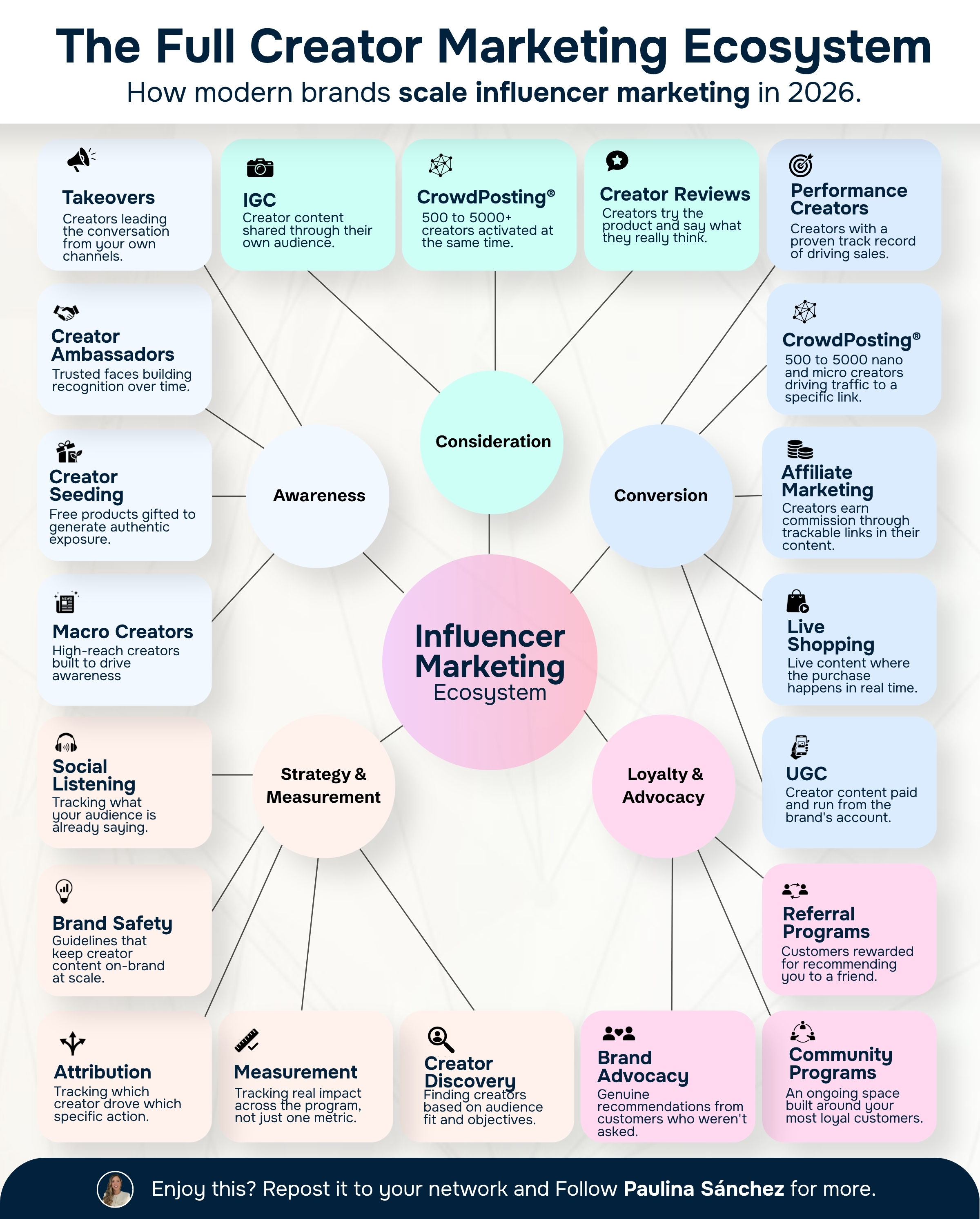
Influencer Marketing Isn't Dead, it's Just Generic
Influencer marketing works when creators sound authentic, not like brand spokespeople. The brands winning today distribute trust across hundreds of smaller voices speaking freely to their niches, not one large creator reciting a corporate message.
2 min read

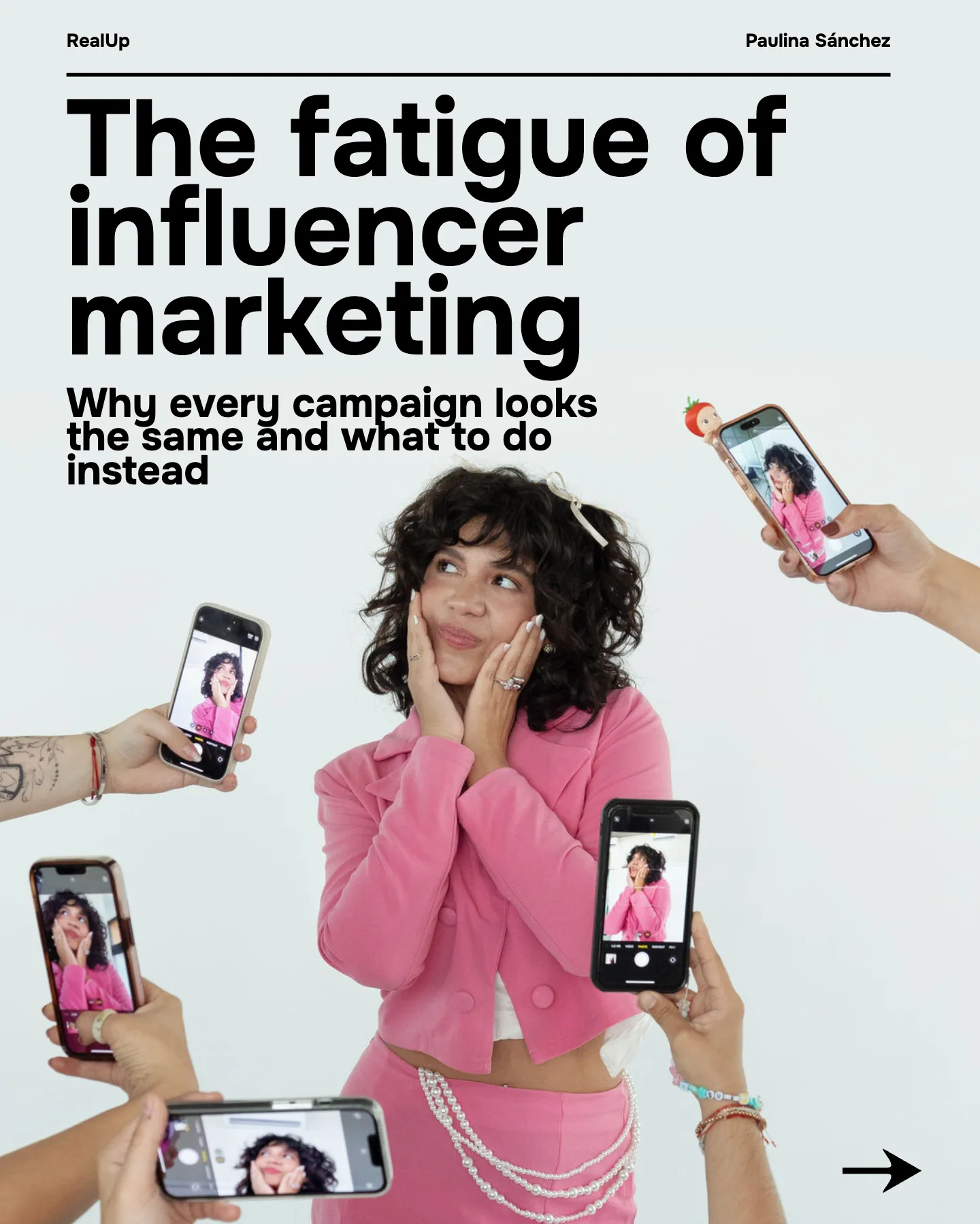
Influencer marketing isn't dead. It has become generic.
In the last decade, brands discovered that consumers trust people more than ads. So they built a formula: partner with large creators, hand them a polished brief, add a disclosure, and push it live. It worked… Until everyone did it.
When every brand runs the same playbook (same creator tier, same scripted format, same #ad disclosure), consumers stop seeing creators. They start seeing ads with a human face.
That's not a channel problem. That's a credibility problem. The consumer didn't become harder to reach, they became better at filtering what feels manufactured.
92% of people trust recommendations from peers more than any form of advertising. The moment a creator sounds like a brand spokesperson, that trust disappears.
What most brands haven't figured out: the thing that made influencer marketing work was never the reach. It was the perception that a real person, speaking in their own voice, actually liked the product. The moment you over-brief that person, you kill the mechanism.
The brands winning right now aren't the ones with the biggest creators. They're the ones preserving the most authentic signal, distributing trust across hundreds of smaller voices, each speaking to a specific community in their own language, rather than one large voice reciting a corporate message to everyone.
After 500+ brand partnerships at RealUp, the campaigns that had the highest ROI all had one thing in common: they didn't sound like campaigns.
The formula that made influencer marketing generic is the same one killing your results. The fix isn't a bigger creator. It's distributed authenticity: fewer scripts, more voices; each creator speaking freely to their own niche, trusted by a specific community, in a way that sounds nothing like a campaign.
Most brands resist this and call it brand safety. What they miss: over-briefing is also a risk. Controlling every word a creator says doesn't protect the brand. It makes it invisible.
Know where your real exposure lives before you tighten the brief:
The brand safety quiz we use at RealUp
Built from $50M in managed spend, tells you whether you're protecting your brand or strangling it.
Diagnose you brand safety strategy here