Conversion Lift vs. Brand Lift: Why You Need Both in Influencer Marketing
Influencer marketing measurement has focused on conversion lift for over a decade, but brand lift is the missing layer that most marketing teams overlook. Discover why measuring both is essential to maximize ROI and build long-term demand.
2 min read

Influencer marketing has evolved exponentially.
Optimising for conversion is not the only layer.
And it's not nearly enough to ensure complete marketing ROI.
Of course, conversion lift matters enormously. It has been the obsession of influencer marketing measurement for over a decade.
But brand lift is the missing layer.
Ignoring it is expensive, and most marketing teams are completely unaware of what they're leaving behind.
Here's how conversion lift and brand lift differ, and why you need both:
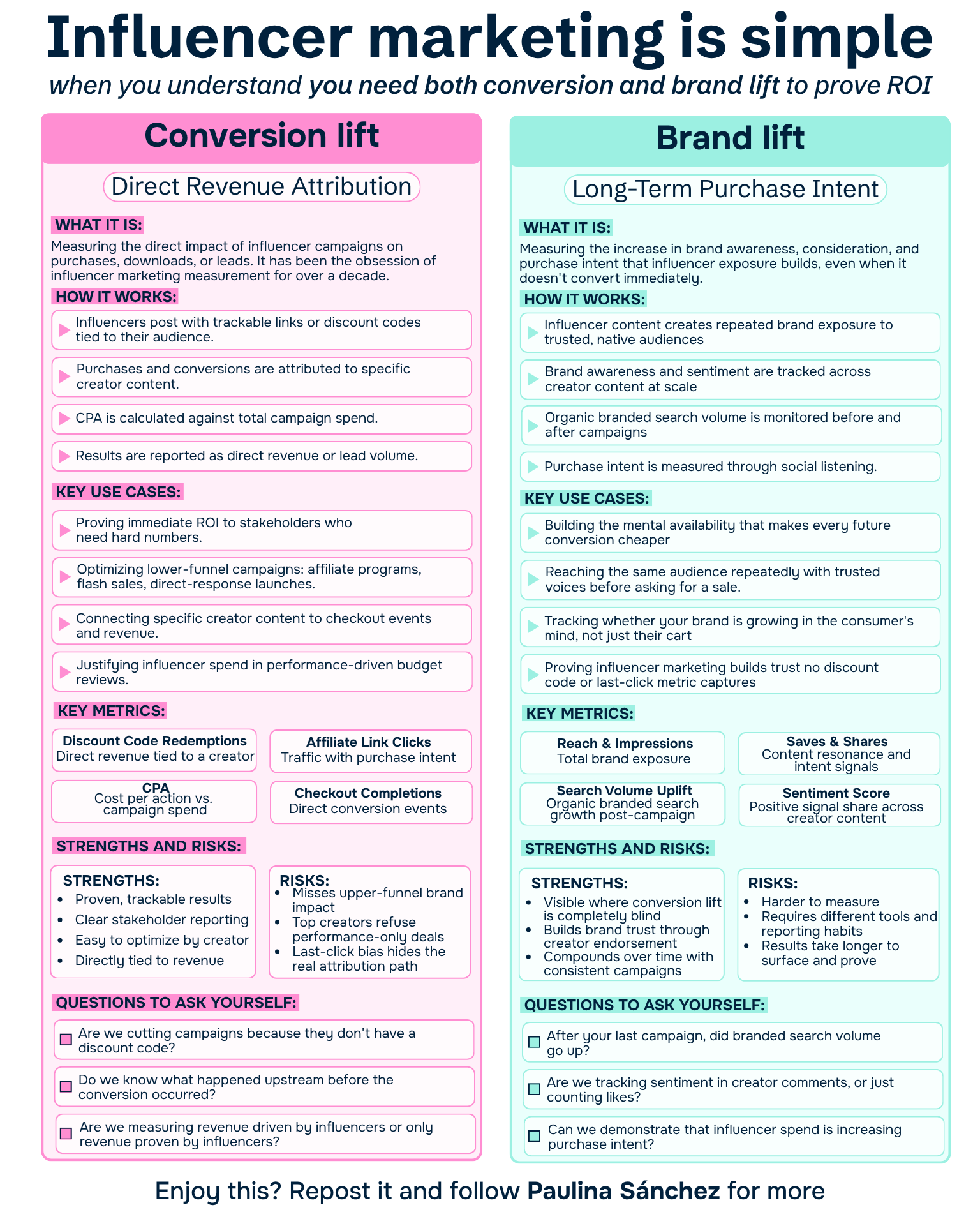
Conversion Lift: Direct revenue attribution
What it is:
↳ Measuring the direct impact of influencer campaigns on purchases, downloads, or leads.
What it's good for:
- Proving immediate ROI to stakeholders who need hard numbers.
- Optimizing lower-funnel campaigns: affiliate programs, flash sales, and direct-response product launches.
- Connecting specific creator content to checkout events and revenue.
Key metrics to track:
↳ Discount code redemptions, affiliate link clicks, checkout completions, CPA, and direct revenue attribution.
The risk right now:
- Brands that only measure conversion lift miss most of what influencer marketing actually does.
- The most trusted influencers refuse performance-only deals, tracking codes burn their audience trust.
- Conversion lift captures the last click. The 10 brand exposures that made the click possible are invisible.
Brand Lift: Long-term purchase intent
What it is:
↳ Measuring the increase in brand awareness, consideration, and purchase intent that influencer exposure builds, even when it doesn't convert immediately.
What it's good for:
- Building the mental availability that makes every future conversion cheaper.
- Reaching the same audience repeatedly with trusted, native voices before asking for a sale.
- Tracking whether your brand is growing in the consumer's mind, not just their cart.
Key metrics to track:
↳ Reach, impressions, saves, shares, organic search volume uplift after campaigns, and sentiment analysis across creator content.
The opportunity right now:
- Many brands still prioritize conversion metrics over brand lift, leaving a significant part of influencer marketing's impact under-measured.
- The brands building this capability now will own the attribution story their competitors can't tell.
- It proves influencer marketing builds the kind of trust that no discount code or last-click metric ever captures.
The point is not that brand lift replaces conversion lift.
Brand lift is simply the layer your customers pass through before they ever convert.
Brands that measure both don't just hit targets, they build demand that compounds.
Enjoy this?
Follow me on LinkedIn for more